Adapting to Remote Learning – Words of Encouragement from your SGA Representatives
It's the fourth week of remote learning for students through the spring semester, as part of efforts to flatten the curve of the COVID-19 outbreak. Broward College has resolved to support students in their journey to complete their academic goals. The unexpected transition has been a test for many as they find their footing in the remote learning environment.
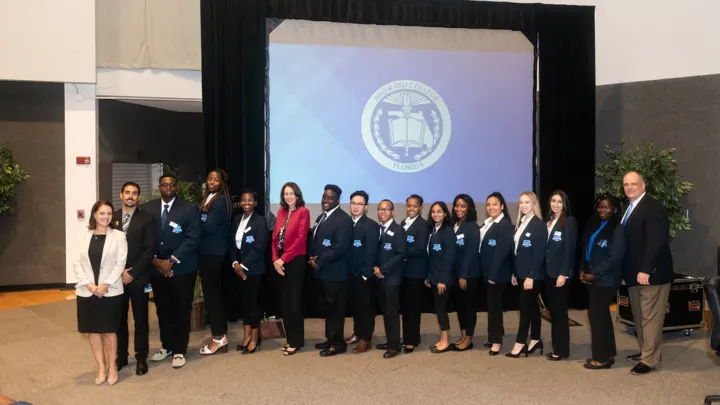
We spoke with the representatives of the Student Government Association (SGA) for North, the A. Hugh Adams Central, and Judson A. Samuels South campuses, who shared how they have been coping themselves and how they are helping their peers in this crisis.
Support for our Peers

Over the past few weeks, students have recognized the extensive set of resources the College has available to them. “Broward College has been extremely helpful with the great number of resources they are offering us the students to keep in track and to make this challenging situation a lot more manageable,” says Tyshawn Stubbs, SGA president for North Campus.
Also, the SGA members have played a significant role as mediators between their peers and administrators. They have remained in daily contact with students through a group chat for members of the student-run clubs. SGA has also received questions and concerns through social media channels such as Instagram.
"Through our group chat, we reach around 50 club members who, in turn, reach additional students," explains Gabriel De Moura, SGA president for South Campus. We continuously offer the College's updates and resources and keep an open line of communications so we can express their concerns or questions so we can direct them to the people who can help them."

"The resources we share go beyond Broward College," explains Erika Noel, SGA president for Central Campus. "We also understand that our peers, very much like ourselves, are experiencing financial and mental health hardship, so we share resources that adapt to that side as well. And at the same time, we encourage those who can take advantage of resources to expand their skill set."
The Challenges we Face
During this crisis, Gabriel says he personally understands the various struggles faced by his peers. “It’s been extremely hard for me to adapt to this,” he says. “First, I’m not a remote learner, I get distracted a lot, and I’m not good with self-discipline. I also had to move away from Florida because I couldn’t afford it after not having my job anymore, so I’m with my family, and it’s hard to do any work while they are around the house.”

Tyshawn and Erika relate to Gabriel to some degree. While their situation is a bit different, they have been experiencing similar obstacles. “For me, it’s been more about the resources at home, I had been without a laptop until I was recently able to get one from the College,” explains Tyshawn. As for Erika, who also works, keeping up a routine after this long is becoming harder. “I was just so used to being on campus and getting into school mode. At the beginning of the remote learning, it wasn’t too bad, but the longer this goes on, the more difficult it becomes for me to know how to manage my time between my school and my free time,” she says.
Stronger Together
While dealing with obstacles one day at a time, the SGA representatives remain hopeful and determined to succeed and help their peers. “Personally, what I miss the most is having that daily encounter with my peers and my professors,” says Tyshawn. “But while we may not be able to see each other face-to-face, for the time being, we must continue to check on each other and offer our help to others.”
Students can stay connected with their SGA representatives via the following social media channels:
North campus: IG @bcnorthsg
Central campus: @bccentralsl
South campus: IG @bcsouthsga
If you are experiencing extra hardship during self-isolation, Broward College is offering an extensive set of resources that address academic tutoring, peer mentoring, mental health, and more. You can find a full list of the student resources here.


Armin Akbarpur Dehkordi: Broward College Honors College Opens Doors to Academic Scholarships
He moved to a new country, completed his final year of high school, and is weeks away from earning his Associate of Arts degree and transferring to the university of his choice with a full scholarship, all in less than three years. For 19-year-old Armin Akbarpur Dehkordi, his post-secondary academic journey has moved as quickly as this summary, and he has no regrets thanks to the opportunities he received at Broward College.
Armin is one of seven Broward College Seahawks selected for the 2020 All-Florida Academic Team, which recognizes outstanding students for their academic achievement, leadership, and service to the community. The scholarship also guarantees full tuition for his transfer to Florida International University (FIU) in the fall.
If you ask Armin, he doesn’t consider himself an extraordinary student. He’s disciplined and works hard, but seizing the opportunities available is what brought him to this point. Born and raised in Germany, he and his family relocated to the U.S. in the summer of 2017, where they settled in the City of Hollywood. He always dreamed of attending college in the U.S. So, he was excited for the opportunity to complete his final year of high school at South Broward High School but wasn’t sure what was next. He didn’t understand the college system or how to apply. He recalls completing a lot of applications as he tried to figure his way around. Then he heard about JumpStart at Broward College, which allowed him to register for courses the summer he ended high school. It meant giving up a part of his summer, but being ahead of his peers.
Broward College as a pathway to academic success

Armin, who plans to pursue sports medicine, says he chose Broward College for several reasons, including affordability and accessibility. “My first choice would have been Florida International University, and it is still the four-year institution of my choice,” says Armin, who wants to stay close to family. “But, I chose Broward College because I didn’t want to put a financial burden on my parents.”
Not a native English speaker, he was encouraged by his cousins to start his post-secondary studies at a college instead of going directly to a four-year institution. Listening to his diction during our conversation, you couldn’t tell. But, Broward College has done more than strengthen his communication skills. His excitement increased as he shared his College experience. From faculty and staff who are accessible and encouraging, Armin feels he has gotten far more opportunities at the College than if he had gone straight to a university.
Joining the Robert “Bob” Elmore Honors College opens doors to scholarships
Armin’s most significant achievements have come through his involvement in the Robert “Bob” Elmore Honors College, where he currently serves as the vice president for the Honors Student Committee (HSC) on the A. Hugh Adams Central Campus. “I kept hearing about the benefits of joining the Honors College at any institution from my cousins who had gone to another college,” he says. “So, I decided to check out the website and then visited their office on one of the campuses.” Shortly after being accepted to the Honors College, Armin received the IRM’s scholar award, which covered most of his tuition at Broward College. Then in March, he was recognized among the PTK recipients of the All-Florida Academic Team. Only 116 students across the state were selected from the 27 state colleges.
It’s not only the scholarships but also the wealth of learning opportunities inside and outside the classroom that makes the Honors experience one to be treasured. “They have a great staff. The team is always available and helpful,” he adds. His encouragement to fellow students is to explore the opportunities available through the Honors College. Interested students must meet specific requirements and complete an application.
Maneuvering remote learning
Even for a disciplined student like Armin, the transition to remote learning has been challenging. “There are times when members of my family interrupt lectures, and ask for help for certain things in the household. So, it’s sometimes hard to make them understand that I am in a class right now, and I can’t really help.” There’s also the challenge of being in the same place and not knowing when to set aside time to study. His solution is scheduling and making sure he keeps a calendar that includes even time to take breaks. He also relies on coping mechanisms such as exercise, meditation, reading, and playing games.
But Armin thinks despite the challenge; remote learning has some benefits. “The professors are very forthcoming, and I see many of my instructions going the extra mile to make sure students succeed, so reach out to them and let them know when you need assistance.”
You, too, can explore the opportunities offered through the Robert “Bob” Elmore Honors College. If you are in your final year of high school and want to hear more about Broward College JumpStart, click here.
Academic Tutoring in Times of Remote Learning – Academic Success Centers Move Operations Online
On March 23, Broward College successfully transitioned more than 90 percent of its face-to-face courses to a remote learning environment. Most departments and student resources have also found a way to serve students during this challenging time.
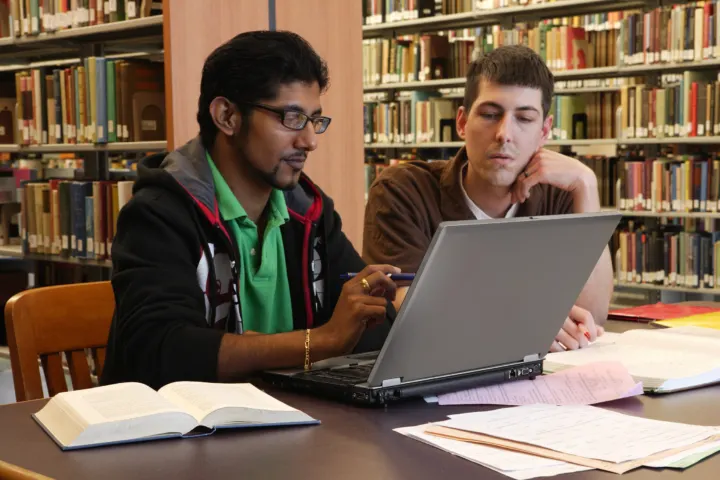
The Academic Success Centers (ASC), which offers learning support to students, also moved its services to a fully online platform.
Supporting Students
 Academic Success Centers at Broward College offer a one-stop-shop for students seeking additional and personalized help in understanding course material. This includes tutoring, short-term equipment loans such as graphic calculators and laptops, computer labs with printing services, and academic labs for math, writing, science, and more, and student research appointments with librarians.
Before transitioning to a remote environment, the ASC would have a team of six certified tutors available at each of their locations. Students could either walk-in or schedule appointments via WCOnline for personal tutoring sessions. However, during walk-ins, students could only have a 15-minute session while appointments allowed for one-hour sessions and the opportunity to choose a tutor.
“Although the majority of students who seek tutoring are struggling academically, some students seek the service to reinforce the classroom material,” explains Jimmy Pierre, a math tutor at North Campus. “And it’s important that the ASC continues to offer this service to all students regardless of their academic standard because they all benefit from the personalized sessions.” Daily, Pierre would serve approximately 15 students, both walk-ins and appointments.
Remote Tutoring and Services
As most students adapt to remote learning, the ASC is using WCOnline, the platform through which students schedule appointments, to provide most of its services including tutoring sessions.
“It’s a challenging situation, but we are making it work. Having done this for over two years now, I have heard how much of a difference my help has made to the students I have tutored, and I know we must continue to provide the service, especially during these unprecedented times,” says Pierre.
The platform allows tutors to communicate via chat, audio, and video and use a virtual whiteboard. “Despite the very few instances where we have encountered technical difficulties, it’s incredible how easily students have adapted to this new ‘normal’ and how resilient they are,” says Pierre.
In addition to the personal tutoring services, the ASC continues to offer workshops and review sessions remotely as well as writing support and assignment reviews. Students can request appointments for these services through WCOnline.
Contacting a Tutor
Students can schedule an online tutoring session anytime via WCOnline.
For an appointment with a tutor from South Campus & Partnership Centers, click here.
For an appointment with a tutor from North Campus, click here.
For an appointment with a tutor from Central & WHC, click here.
Learn more about the student resources available during remote learning here.
For updates and information about the College’s response to the Coronavirus crisis, visit broward.edu/coronavirus.
Ensuring Student Success - What You Need to Know About Financial Aid
We are almost at the end of the spring term, and before you know it, it will be the start of a new academic year. Whether you’re new to college or have been enrolled before, we know some of your most important questions to get things finalized for registration, related to financial aid. As part of our efforts to help you remain on track, we sat down with Cherly Pierre, director of Financial Aid Operations at Broward College, to get your questions answered.
Who qualifies for financial aid and how to maintain eligibility?
The Department of Education is responsible for deciding eligibility for financial aid based on the documents provided. Students are encouraged to complete the free FAFSA to apply for federal grants, work-study, and loans. You must complete a new application for each academic year, which runs from July 1 through June 30. The data released by FAFSA is then used by states and institutions to award aid.
General requirements for eligibility:
- Financial need
- U.S. citizenship or residency
- Current enrollment in a college or career school.
Broward College requirements to maintain eligibility:
- Students must maintain a minimum 2.0 cumulative GPA.
- Students must complete a minimum of 67% of the coursework attempted during each term.
- Students must be on track to complete their degree requirements within 150% of the number of credits required for the program.
What are important deadlines for students to remember?
 Current Seahawks are encouraged to renew their FAFSA starting October 1 and complete a new scholarship application each academic year.
If you are a current student, you may have heard of a priority deadline. That is the date set by the College if you want to receive early consideration for eligibility. By completing the FAFSA application and turning in all necessary documentation by the priority deadline, students are guaranteed to have their financial aid award posted before the semester’s payment is due. Students who have outstanding documents or information, will see a red flags in their myBC portal.
- Summer enrollment: must be finalized by June 10.
- The FAFSA priority deadline for fall 2020 is set for June 24,2020.
Are there any changes to financial aid regulations that affect remote learning?
- To provide relief for student loan borrowers during this time, federal student loan borrowers have been temporarily postponed.
- Monthly loan payments have been suspended from March 13, 2020 through September 30, 2020, but you can still choose to make payments.
Are there any new regulations from Congress during COVID-19 that change the financial aid requirement for students?
- There are no changes to the initial eligibility for students to receive financial aid.
- Interest on some federal student loans is also temporarily set at 0%; these include defaulted and nondefaulted Direct Loans, defaulted and nondefaulted Federal Family Education Loan (FFEL) Program Loans, and Federal Perkins Loans
- The CARES Act makes significant changes to the requirements and flexibilities surrounding the Return of Title IV Funds (R2T4). The U.S. Department of Education is currently reviewing the implications of the Act and will provide appropriate guidance as soon as possible.
- The CARES Act requires the Department of Education to stop collection activities on all defaulted loans, including administrative wage garnishment and the Treasury Offset Program until September 30, 2020.
What if a student’s financial position has changed due to personal or family job loss?
Many students and their families are being affected by this global pandemic and may be facing unemployment or finances have shifted. For the upcoming 2020-2021 award year, students will have the opportunity to fill out an income adjustment form.
The Broward College Student Financial Services is available to assist students with any questions concerning financial aid eligibility and ensure that the financial aid process is both pleasant and seamless.
Remember, summer registration is currently open and we can’t wait to help you get you ready for classes. Find more information about financial aid on the Broward College website.

Participate in the 2020 Census – How Do College Students Benefit from an Accurate Count?
By now, every household in the nation has received an invitation from the Census Bureau to complete the 2020 Census. The U.S. Constitution mandates that every ten years, the government counts its population for budgeting and representation purposes.
An accurate count of every citizen and resident in the country is important as the data is used to determine federal funding for social programs specific to each state. This includes new roads and highways, new schools, clinics, what types of businesses and services are needed in a particular community, and more.
All personal data collected during the census is protected by law and cannot be shared with any other government agency or business.
Benefits for College Students
 While the census will result in benefits for the entire community, college students also benefit directly in several ways. A proper count allows state legislatures to redraw electoral districts if needed, which gives a better representation in Congress for each community. Local businesses can use census data to have a better understanding of the demographics of the population they work in and plan for possible expansions, adjust the services they offer, create job openings, and more.
The census also helps to identify if there is a need for improved funding for Pell Grants, federal student loans, and campus funding, along with legislation that impacts college students directly. Federal funding is also directed toward natural disaster planning, emergency relief funds for situations such as the COVID-19 pandemic we are currently experiencing, public transportation, health services, and more.
How to Complete Your Census
Filling out your census is easy. You can complete it online, by phone or by mail. If you received the invitation to complete the census, use the unique 12-digit census ID included. If your household has not received a notification in the mail yet, you can still complete the census online by clicking the “If you do not have a Census ID, click here” option.
For more information on special circumstances or filing questions, you can refer to the Census’ FAQ page.
Ask Your Peers – Mentoring Program Offers Guidance in College
Providing high-quality education is Broward College’s mission. In order to do so, the College understands the importance of providing a holistic experience, which entails offering tools and resources geared towards personal and academic success.
The Peer Mentoring and Leadership (PML) program provides students with guidance for them to successfully navigate the College’s resources on the journey to achieving their academic goals. “The main idea is to increase their sense of belonging here at Broward College, which in turn will increase their chance of succeeding academically because they feel comfortable and are aware of the resources we offer them,” explains Farah Pierce, director of Student Achievement Initiatives (SAI).
 Most of these resources, including the PML program, have successfully transitioned to a remote environment as the College continues to engage in social distancing to slow the spread of COVID-19.
Transitioning to Remote Operations
Even before it was required to transition into fully remote operations, PML was familiar with the concept of remote mentoring. While peer leaders were required to attend physical team meetings and training, they were able to do part of their work remotely.
“We were already accustomed to communicating with our mentees via text or emails in addition to our face-to-face sessions,” explains Toyesha Simpson, a peer leader. “However, there has been some adjustment. Most of the peer leaders have had to reinvent ourselves to maintain strong communication with our mentees as this situation is new to everyone.” Toyesha has found ways to keep the line of communication open with the students she is helping by sending daily motivational messages and doing a regular check-in.
Mentoring Coordinator, Marta Bautista is aware that peer leaders are also in need of their support system now more than ever. “If we want our peer leaders to serve their mentees successfully, we must offer strong support. We are providing them with as many resources as we can to make sure they take care of themselves first. We are facilitating material on mental health, time management, E-learning, for their personal use and to share with their students,” she says.
Connecting with a Mentor
Students who would like to connect with a peer mentor can do so at any point during the semester or academic year. Prospective mentees must complete a form with their contact information and be willing to engage in constant communication with their mentors. After reviewing the form, the SAI office will contact the student to assess the needs and expectations, and pairing usually takes anytime between two days to two weeks.
The pairing between mentor and mentee is random unless the mentee has a special requirement. Currently, the College is serving 340 students through PML, although this number may increase in the following weeks. “Our projection is to see an increase in demand because of the nature of the service, and given the current situation, it is understandable that students will need all the support they can get,” explains Pierce.
“It’s up to all of us to make an extra effort to remain motivated in this situation, but we also want to ensure our students that we are here to help them in any capacity possible, we just need them to communicate with us so our peer leaders can help you achieve your academic goals,” says Bautista.
Becoming a Peer Leader
If you would like to offer support to your peers as a mentor, applications open soon.
PML is funded through a federal grant provided by AmeriCorps, a network of national service programs that seek to improve lives and foster civic engagement. Students who choose to serve as peer leaders become AmeriCorps members and have access to its benefits, which include student loan deferment, leadership and skills training, and limited health benefit options.
The College begins recruitment for prospective peer leaders during the summer. Interested students must fill out a form, meet the onboard requirements of the College and AmeriCorps, and complete intensive training. Once selected, peer leaders access the benefits of their own while helping others.
Part of the requirements to be an AmeriCorps member is that mentors complete a year of service, after which they receive an Education Award they can use towards the educational expense of their choosing. Through their year of service, peer leaders also receive a living allowance. Additionally, leaders are paired with a faculty mentor in their pathway to assist them with their personal goals.
Peer leaders have access to a support system of College staff in departments, including advising, financial aid, and registration, among others who assist them in their job. Each leader can manage a load of up to 10 mentees and work an average of 27 hours per week.
To learn more about Peer Mentoring and Leadership, visit broward.edu/mentoring.
Visit broward.edu/coronavirus for updates, student resources, and more.

Online Expert Offers Insight into Remote Learning
It’s almost two weeks since the College transitioned to remote learning as part of efforts to promote social distancing to slow the spread of COVID-19. Broward College faculty, staff, and students have shown their determination to rise above the circumstances and continue their journey towards academic success.
Priscilla Suarez, associate dean of Academic Affairs for Arts, Humanities, Communication & Design pathway, is an online expert who leads the Online Liberal Arts department. She works closely with Instructional Services in the development and implementation of innovative and engaging learning experiences for online courses.

She shared her expertise in the field to offer some insight into the advantages and opportunities available through remote learning to students and instructors.
Online Versus Remote Learning
Although they both take place virtually, online and remote learning differ from one another. “Essentially, remote learning, which is what the College has transitioned to, entails some form of synchronous interaction between faculty and students,” explains Suarez.
Synchronous learning is when students are required to log in at a determined day and time, whether via Blackboard Connect or a similar videoconferencing tool, for a live lecture. On the other hand, online courses are completely asynchronous, which gives flexibility to the students to log in anytime and complete assignments at their own pace by a deadline date. Online courses often require only the use of D2L.
A Successful Transition Remote Learning
The College’s immediate efforts to support the change to remote learning, including real-time technical support for faculty through the Center for Teaching Excellence and Learning (CTEL), proved successful as most face-to-face courses were successfully moved to remote learning, including art studio courses and dance appreciation, for example. More than ninety percent of courses were transitioned, ensuring that students can continue their academic goals.
“In times like this, it’s crucial that we show our students that we are doing everything in our power to provide them the best quality learning experience,” she says. “Through the feedback we’ve received, we know that thus far, everyone is adapting wonderfully.”
Tips to Succeed
Despite the differences, Suarez explains that the tips to succeed in a remote learning environment are not that different from an online course. “It’s all about understanding the responsibility and commitment it takes from the onset,” Suarez says. “A big part of student success in remote learning comes down to building strong communication with your faculty to make sure you know exactly what the expectations are from both sides. Students should also remember always to ask questions.”
Additionally, Suarez strongly recommends that students are well aware of their syllabus. “Your syllabus is your guide. In remote learning, it’s crucial because it lists all the software you may need, and any special instructions such as compatible browsers for your labs, the formats accepted by D2L, and such.”
As for faculty, the College has established a “one-stop virtual shop” where they can find how-to-tutorials and other resources related to D2L. “We are working on possibly adding similar resources for Blackboard Connect, and also are recommending training for administrators as well on these technologies so they can better support the faculty.”
“This is a new beginning for most of us, and I believe the most important thing to remind everyone, faculty, and students, is that we are in this together and we must be kind, patient, and empathetic towards one another,” Suarez concludes.
Faculty can find a complete guide of D2L resources here.
A thorough list of resources for students including advising, tutoring, and more is available here.
For more information on updates related to COVID-19, please visit broward.edu/coronavirus.

Tips to Succeed with Remote Learning: Student Edition
Having trouble adjusting to remote learning? We asked one of our more experienced Broward College students to share some advice on navigating the transition. Meet Peter Stein. He’s pursuing a degree in education and has taken both on-campus and online courses. He says there are many benefits to online or remote learning and shared his best tips for getting the most out of online learning, especially in the middle of all this social distancing.
Be Present
While on-campus learning encourages students to be active in the classroom, ask questions, create discussions, and build a relationship with professors, online learning can often be perceived as an excuse for not getting involved.
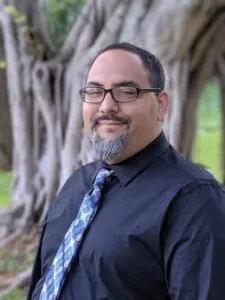
“People think transitioning from a classroom to online courses requires less time and work,” says Peter. “But I actually find that I spend more time doing school work when I have classes online than on campus.”
It is easy to become isolated when learning remotely, however, giving in to this impulse may lead to a lack of understanding or poor academic performance. Peter highlights the importance of maintaining an active presence in online class discussions and taking advantage of available collaboration resources, like Blackboard Collaborate.
He explains it is important to remain active and interact with not only other students but your professor as well. You can do this by starting discussions with fellow classmates about the lesson, asking questions, and using the extra help professors may offer to understand the topic better.
“It’s like you’re in the classroom. You have a question? Ask it! And try to ask it in the public forum, because you never know when you are going to ask a question that someone else was thinking,” said Peter. “And vice-versa, read what everybody else is writing. You never know when you’re going to find a good tip.”
If you were in contact with other students in the classroom before, he recommends continuing the relationship in chats on whatever platform you have available, by discussing the lesson, and comparing notes. This allows you to get the most out of what your professor has taught and may shed light on concepts you may have missed or misunderstood. This type of interaction with your classmates is also a great motivational tool and keeps you connected.
Keep a Schedule
Keep yourself accountable by creating a schedule similar to the routine you previously had. This could mean waking up at the same time, doing an at-home workout or meditating before class, and doing your work at roughly the same time that you would have been in the classroom.
It is easy to become distracted at home, so Peter also suggests keeping a schedule of things you need to do, including deadlines, to ensure completion of tasks.
“Just because you’re at home doesn’t mean you’re on vacation,” he adds. “Take the time, do the work.”
Peter believes that maintaining a healthy and balanced schedule helps keep you from becoming bored quickly, and losing the motivation to complete tasks. Taking breaks throughout the day is also recommended to recharge and eliminate lethargy.
Support Each Other
Social distancing is difficult; however, in this age of technology, we have all the tools we need to communicate with each other.
“Look for support from your family and friends. Just because we’re isolated doesn’t mean you can’t be social,” said Peter, who also wants to remind his fellow Seahawks to be kind to others in this challenging time.
“Be patient with each other,” he says. “Professors are learning to teach in a way they may not have done before. We’re forced to do things we’re not used to. We need to work with each other and be understanding with each other.”
Watch Peter share his tips in this short video.
Broward College has student resources to help you succeed in remote courses and learning activities. For more tips, frequently asked questions, and the latest information on COVID-19 visit www.broward.edu/coronavirus.
Keeping Up with Student Life – Staying Engaged Virtually During Social Distancing
Our day to day lives has changed as we practice social distancing to help slow the spread of Coronavirus 2019, also known as COVID-19. We are no longer in the classrooms, libraries, Student Life Centers, or gathered at our favorite eatery on campus as learning and working are now remote.
Known for its innovation and creativity inside and outside the classroom, it is no surprise that Broward College, through its Student Life department, has found new ways to offer social activities, even if it’s virtually.
For the next six weeks, the Student Life departments will work together to hold live events via social media and release pre-recorded content on their social media platforms, including YouTube, Facebook, and Instagram.
 "The College is undertaking several measures to ensure that there is no drop-off in terms of the services we regularly offer the students,” says Stephanie Repaci, Student Life Director at the A. Hugh Adams Central campus. “Our goal is to reassure students we are here for them in every capacity by continuing regular student life programming, which we know is extremely helpful, especially now more than ever.”
Promoting Student Engagement
Repaci and her colleagues, at the North and Judson A. Samuels South’s campuses, directors Leo DeAraujo and Frances Fraser, have been working hard to find new ways to attract and captivate students. Regular programming in their departments focused on leadership, skills training, and motivational workshops and lectures.
They plan to follow through with most of their programming, adapting content to the new delivery methods to keep it relevant. “We understand that we must make certain changes not only for relevant purposes but also to be helpful to our students,” explains Repaci. Among those changes, there will be at-home workout tutorials, workshops on healthy cooking from home, tips, and advice on how to excel at remote learning. Additionally, they plan to offer broadcasts on leadership development, and in-home activities that include but are not limited to, challenges and DIY projects.
While a calendar of events is not fully available yet, as of Monday, March 23, the department began hosting virtual events starting with their weekly Monday Meditation session available on .
Keeping Updated
Both live and pre-recorded content will be uploaded to every social media platform for each campus and partnership center. Students are encouraged to check their student email regularly and follow at least one of these social media accounts to remain informed about upcoming content and events:
- Hugh Adams Central Campus: IG @bccentralsl
- North Campus: IG @northbc,
- Judson A. Samuels South campus: IG @bcsouthsl
Activities for Student Veterans
Students veterans can also remain connected. They can join Carlos Parra, director of Student Affairs, and the Office of Veterans Student Engagement every Friday from 5 – 7 p.m. through May 1, for virtual mixers via ZOOM. Students will receive a link to join via email.
Additionally, the Office of Veterans Student Engagement will host weekly one-hour check-ins every Tuesday at 10 a.m. and 2 p.m. Students can share upcoming events and just keep informed about happenings and fellow student veterans.
Veteran students who want to request access to hosting ZOOM meetings and social events can reach out to Parra at [email protected].
Remaining Positive
As we adapt to our current situation and find ways to succeed academically, it’s also important to remember to keep a positive mindset. Broward College stands with you, and will continue to offer updates, resources, and tips on how to navigate through your academic journey during this crisis.
Students can check broward.edu/coronavirus for a complete list of student resources, tips on remote learning, and general coronavirus updates.
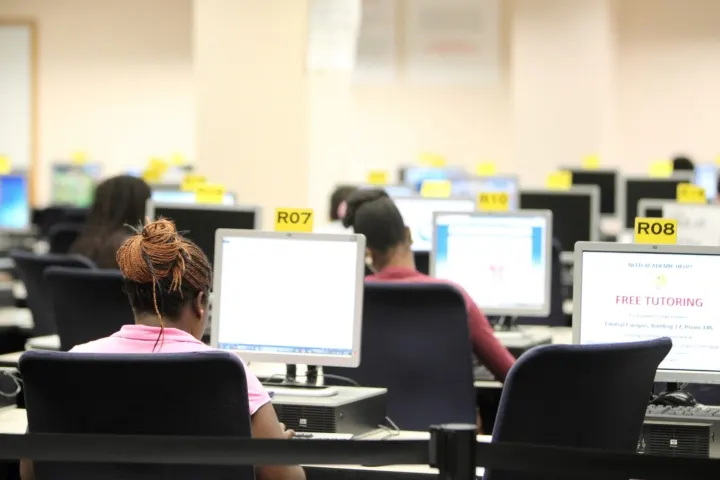
Tips to succeed with remote learning
The transition to remote learning is a new experience for many students, especially adjusting to learning and interacting outside of a classroom setting. Planning for this change will help you be successful in navigating this shift in your academic career.
We put together a few tips to help get you started.
Create a routine
Having a routine is essential in helping you navigate learning outside the classroom. It may be tempting to remain in bed until the last possible moment, but it’s best to get up at your normal time. Just because you’re not going to a classroom, doesn’t mean you’re not going to class. Getting dressed and having breakfast as you usually would also help create a strong foundation for the day.
Once you’re up and ready for class, you should be working out of bed in a designated work space. This means finding somewhere you can do your work and not somewhere where you would typically lounge or relax. Separating lounging and working spaces is important to help you navigate the change.
Also, have a list of tasks and priorities you’d like to achieve for the week. Having clear goals will help you stay on top of assignments and set objectives to work towards.
Ask questions like you would in class
Despite not being face-to-face with professors and other students, you can still ask plenty of questions. Communicating with not only professors, but other students will help you in navigating this course. Finding out the best way to contact professors will also help with navigating this change, your professor will have the best means of contact through their syllabus.
If you find you’re having a hard time with remote learning, make sure you’re reaching out. Don’t wait until an assignment is due to email a professor. It’s important that you’re asking questions and clarifying any information you may not understand, the faster you seek out help, the easier it will be the navigate the course.
Minimize distractions
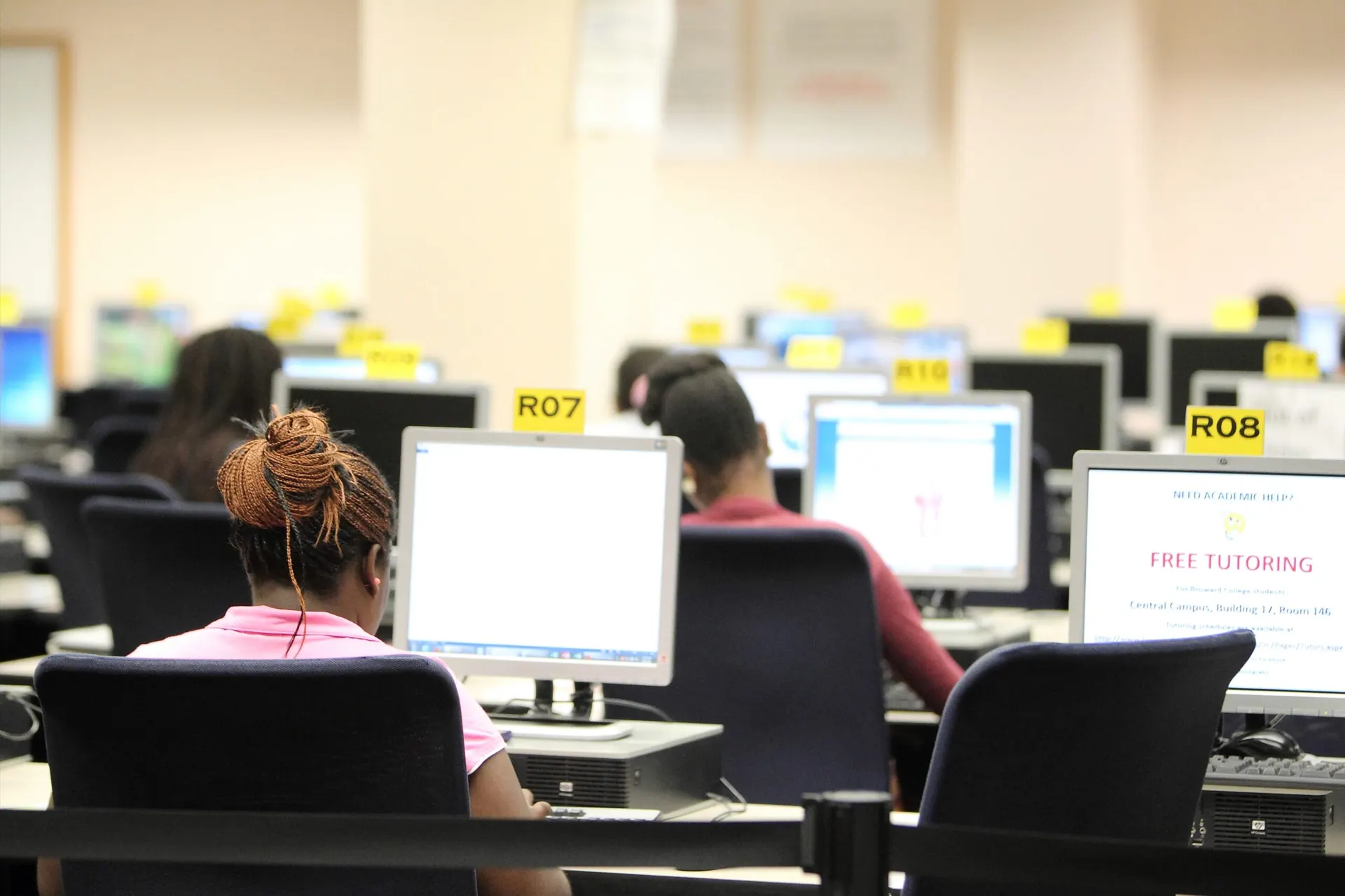 Whether you live alone, with roommates or family, make sure you’re minimizing your distractions. It is important to let others know you need time to work on your class, finding a schedule that works best for you and those around you will help you successfully navigate this time.
When you’re working make sure you have the television off and have your phone on silent or vibrate as you would in class. It may be tempting to have your phone near you checking social media or listening to music, but it may cause you to become distracted or unfocused. Using the same rules you would have in class will help you navigate being in an online course.
If you find it too hard to stay off sites you can use free applications like Freedom and Cold Turkey, which block out distracting sites and phone applications for a period of time. If all else fails ask a family member or friend to hold you accountable, have check-in times to ensure work is being completed.
Take breaks
Take breaks throughout the day, it’s important to step away to eliminate fatigue or just to recharge. You can’t spend the entire time working on your class, and it’s not expected that you do. Whether it’s a break between classes or between work, just take a moment. On campus you’d typically have time between classes or work, you can do the same thing while taking an online course.
Breaks can include a moment to stretch your legs, take a quick walk to the mailbox, or even stop to grab a snack. Though be cautious of breaks, and make sure you’re holding yourself accountable it’s easy to get carried away and forget to return to your work, setting an alarm can help remind you to get back to the task at hand.
Be patient
Being patient with yourself will help you navigate this change in learning environment, also being patient with professors who may teaching online for the first time will help the change go smoothly. Make sure you’re giving yourself time to adjust to the change, adapting to changes won’t happen overnight. While these times may be tense, you’ve got all the tools you need to make yourself and your continued learning successful at Broward College.
For more tips, frequently asked questions, and the latest information on COVID-19 visit www.broward.edu/coronavirus.