Get to Know Dr. Deborah Posner, Key Presenter at the Continuous Improvement Conference
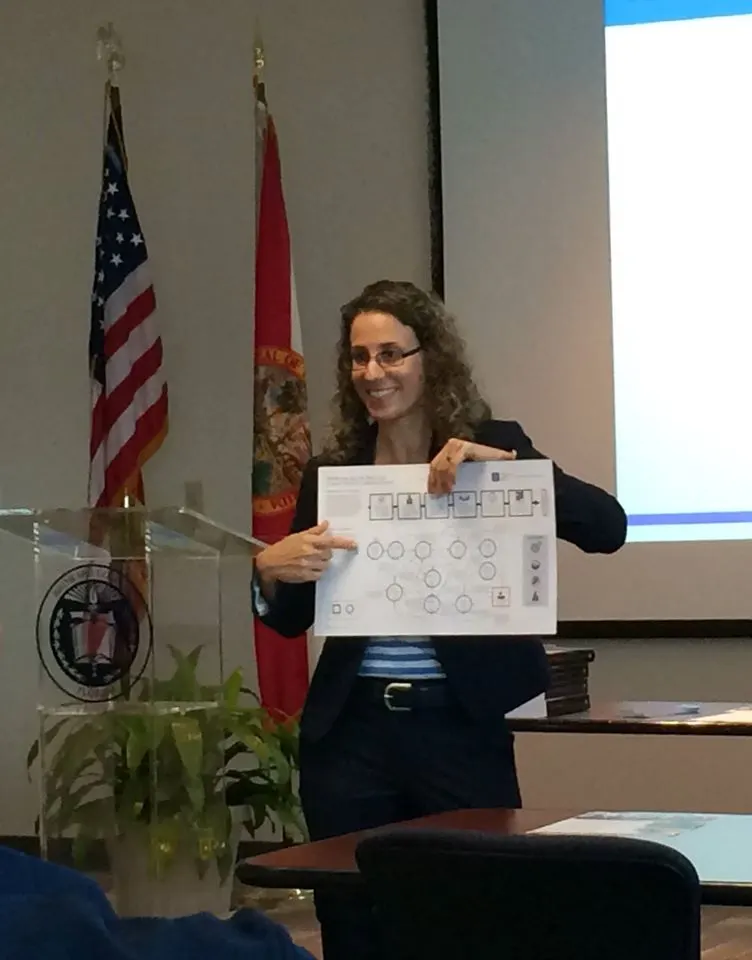
Dr. Deborah Posner has an unwavering passion for education. The associate vice president for the Office of Institutional Planning and Effectiveness has used her innovative approach to guide Broward College on a successful path to accomplishing its goals. Her experience comes from years of working in academia and corporate business, and she’s excited to share her knowledge at the upcoming Continuous Improvement Conference being hosted by her department in July.
 Passion for Education
The South Florida native has taught middle school, high school and at the college level for more than 20 years. As a professor, she specialized in math, advertising, marketing and financial management. She was drawn to the field of education by her parents, both math teachers with more than 30 years of experience.
Even though she enjoyed the classroom, Deborah had a desire to do more. She transitioned to administration as an associate dean, dean, district director and then her current role at the College. Along the way, she spent time in the corporate and government realm as a senior business analyst in project management and quality assurance. She enjoyed the challenge of working for private institutions, but fell in love with the community college model of open access and affordability.
#BCProud
Deborah takes pride in leading the strategic planning process by setting the right goals and measures. She and her team are there to support each department as they work to ensure the College provides the best programs and services to students. Once strategies are implemented, the focus turns to the continuous improvement cycle in the never-ending search for ways to do even better.
Her favorite part of her job is what she does with FAST (Find, Analyze, Sort, Transform) teams. This is where she puts the Lean Six Sigma principles into practice through the formation of cross-functional teams. Lean Six Sigma is a globally recognized methodology for maximizing operational efficiency as well as an enterprise-wide business strategy with direct bottom line impact. A certified black belt within the program, Deborah will offer her Lean Six Sigma white belt workshop for free to conference attendees. The program normally costs $199 to take through the Continuing Education department.
Deborah is always looking for opportunities to share her vast acumen to an assortment of audiences. She has presented across the country including to the Association of Community College Trustees (ACCT) with President J. David Armstrong, Jr. and in an airplane hangar filled with aviation executives at the Lean Summit in Tampa.
The Continuous Improvement Conference
She is excited to see her vision for a Continuous Improvement Conference realized at Broward College. The Continuous Improvement Conference is designed to help industry professionals achieve operational and performance excellence. Deborah is among a list of successful business leaders who will share best practices and expertise on issues related to establishing and achieving strategic goals to leadership.
The conference will be hosted at the A. Hugh Adams Central Campus and will begin with a welcome social event on Sunday, July 23 from 5 p.m. to 8 p.m. A day-and-a-half of program will follow on Monday, July 24 from 8 a.m. to 4:30 p.m. and Tuesday, July 25 from 8 a.m. to 1:30 p.m. Breakfast and lunch are included. Registration is $300 and limited to 70 attendees.
To register and for more information, visit www.browardcic.com

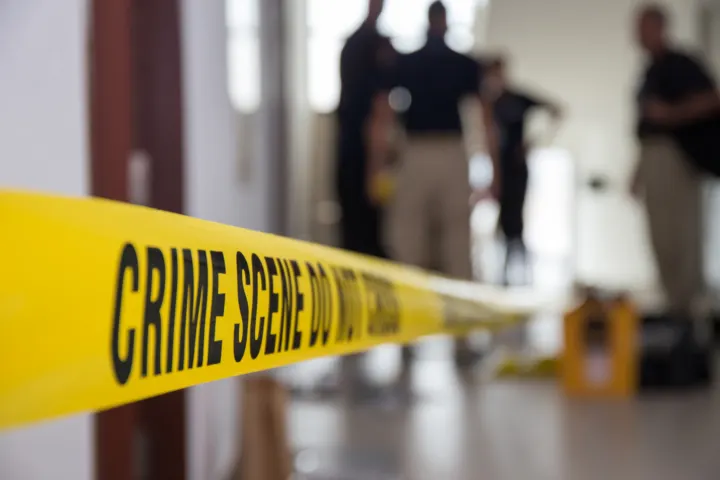
Day in the Life of a Crime Scene Investigator
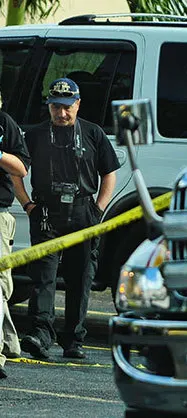 Blood splatter, bullet casings and fingerprints are some of the evidence Gary Cortolillo, a certified crime scene investigator for the Davie Police, gathers on the job. No day is the same for the Broward College alumnus.
Gary’s shift runs from 7 a.m. to 3 p.m., Monday through Friday. He is also rotating on-call with two other investigators during the weekends. Gary usually starts the morning with paperwork, finishing up reports from the previous day, or processing existing evidence.
Sometimes, he’ll get dispatched to a crime scene either by his direct supervisor, the investigation division or a sergeant from the department. His unit is typically involved in major crime scenes or property and residential burglaries where there is a large amount of cash, firearm, jewelry or drugs in the case.
Gary also works on homicides, officer-involved shootings and other similar scenarios. During a homicide he joins fellow investigators on site. They are briefed by the lead detective or the sergeant supervising the scene. Then there is a quick walk-through to point out evidentiary areas and items that need processing. Next comes the first stage of documentation. Gary will take lots of photographs of varying distances, as well as photos of each individual piece of evidence. The department also uses 360 photography, a technique similar to what realtors use when they are trying to sell a house.
Ultimately, Gary says they’re attempting to reconstruct the events that occurred during the incident to help assist the detectives. He also takes notes with general measurements of the scene so that a crime scene sketch can be done. Gary will look at the points of entry like doors and windows, as well as mirrors and drawers. If it’s a homicide, he will look at every surface of the house. Once the fingerprint is taken, he and fellow investigators will look at bloodstain patterns and conduct bloodstain pattern analysis to get an idea of what happened. If shots were fired, then they look at the bullet trajectory.
Who is an ideal candidate for a crime scene investigator?
Gary recommends that those interested in the field should:
- Be detail oriented.
- Have very good observational skills
- Be able to think outside the box and put themselves in the shoes of an offender.
He credits his love for his career to the education he received at Broward College and, particularly, to Professor Jack Hackett.
“The classes that I took under Professor Hackett really prepared me for what I was about to face on the streets and in the real world,” Gary said. “I had the ability to gain textbook knowledge, but also what you are actually going to see in a real life situation. I really hit the ground running early on…So I was pretty well prepared for what I was going to face on the job.”
 If you love playing Clue and you’re interested in pursuing a career in crime scene investigation or criminal justice, visit the Broward College Institute of Public Safety page.
Do you feel you have a compelling story to tell or know someone from Broward College who does? Let us know by emailing a short description to [email protected].